
LIMBO ENGAWA
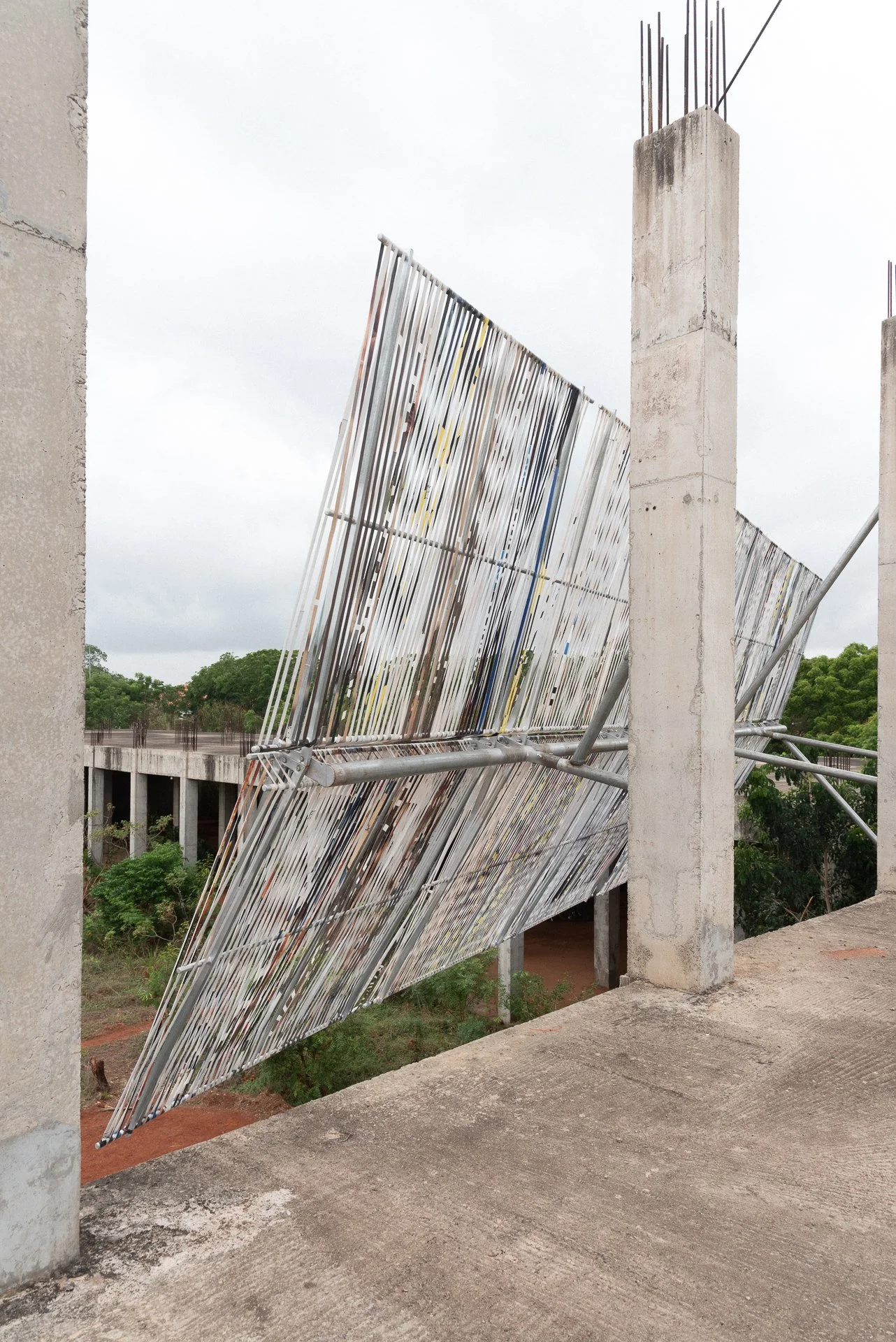
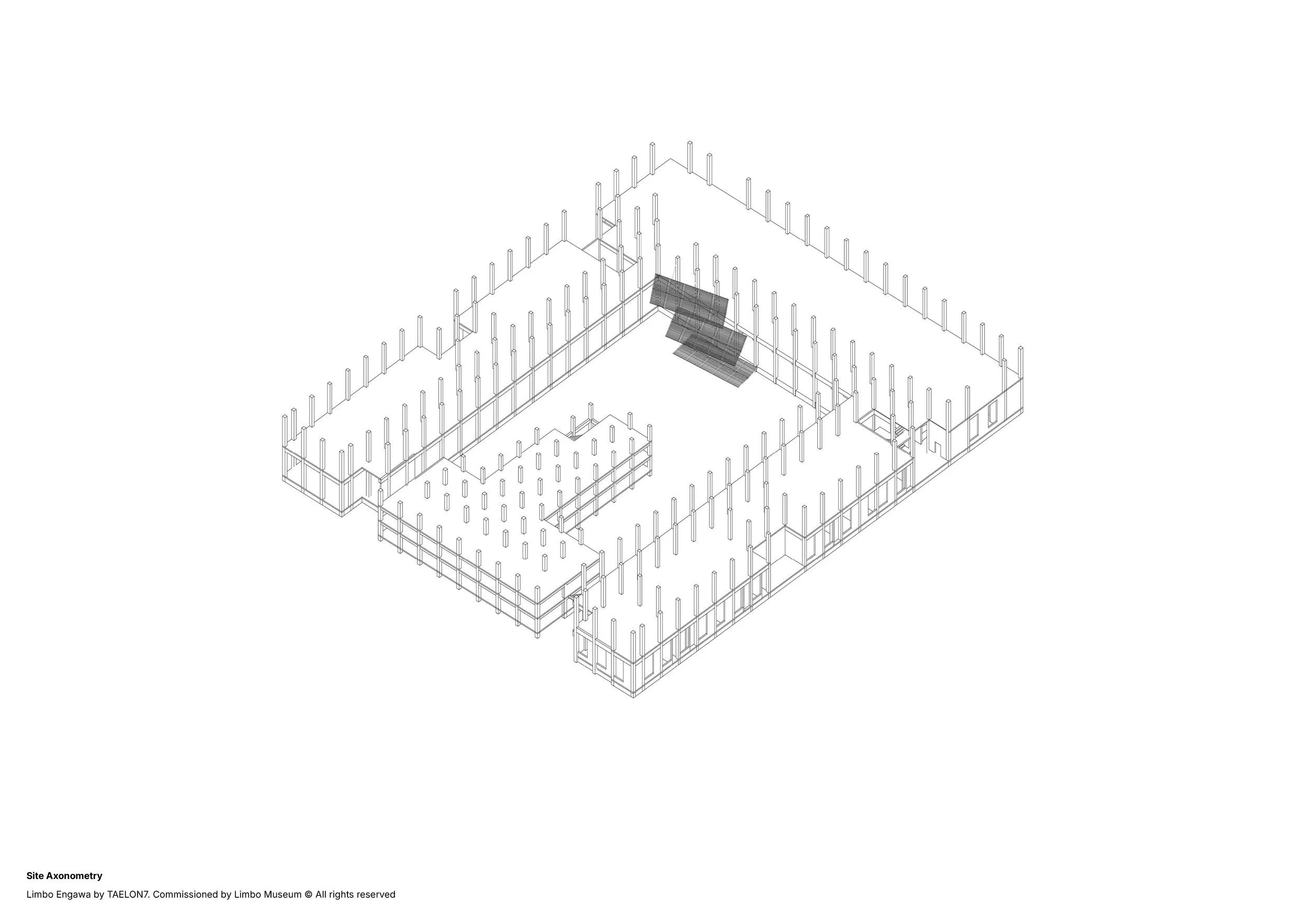
In many rapidly urbanizing contexts, unfinished concrete structures are surrounded by what appears to be leftover land — terrain vague, vegetation, or informal farmland. Yet neither these buildings nor the land around them are empty. Skeletal structures are often inhabited or temporarily occupied, while the surrounding ground is cultivated, producing food and sustaining livelihoods within the city.
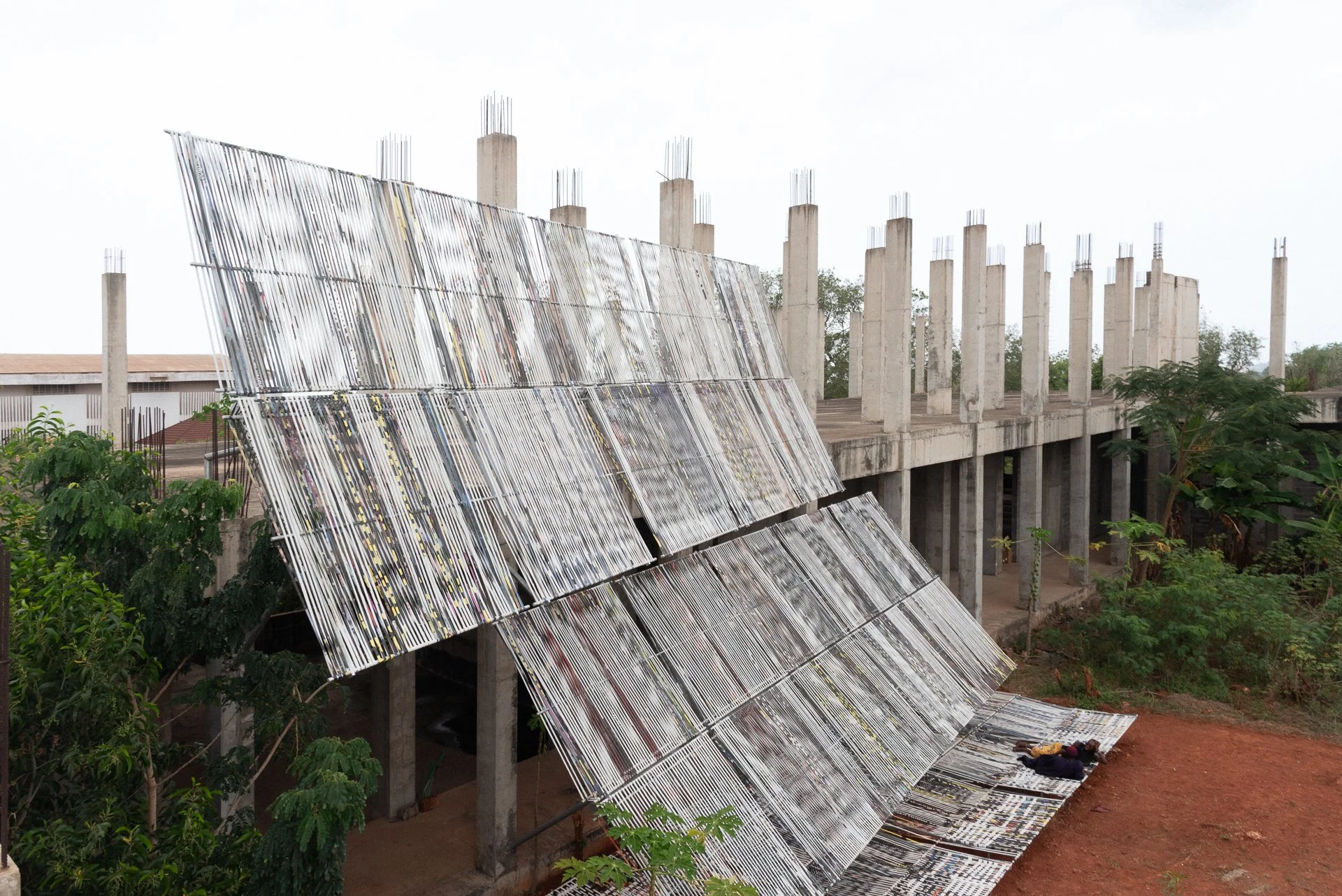
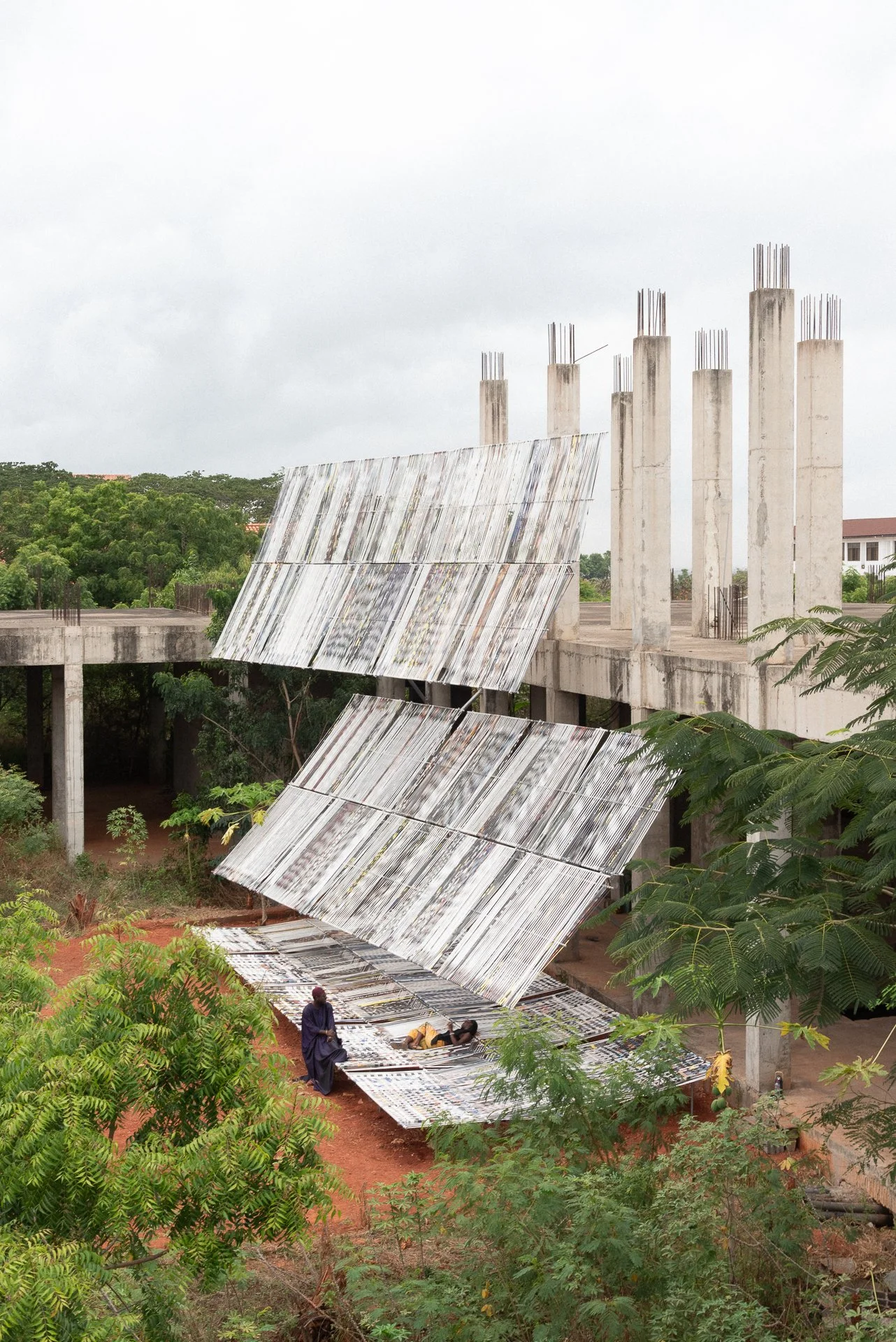
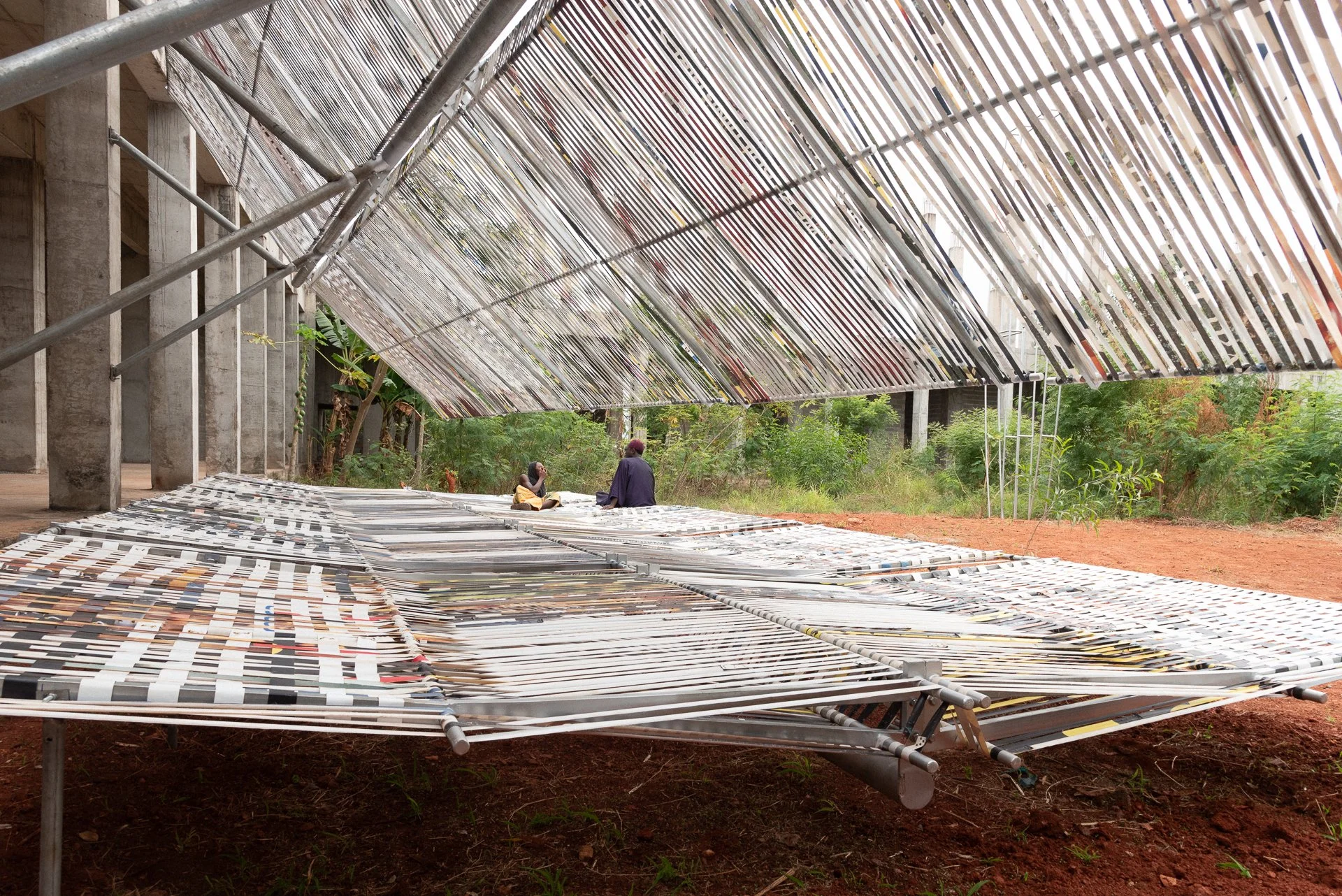
Limbo Engawa is situated at the threshold between unfinished architecture and landscape. It occupies the space between concrete skeletons and cultivated ground, creating a soft transition where there is usually an abrupt edge. By introducing human-scaled elements into oversized and often abandoned megastructures, the installation reframes them as places of use, care, and encounter. The term engawa refers to a transitional zone — a space between interior and exterior, building and landscape, private and communal life. In Limbo Engawa, this idea is reinterpreted within a contemporary urban context, using architecture to mediate between formal structures and informal land use.
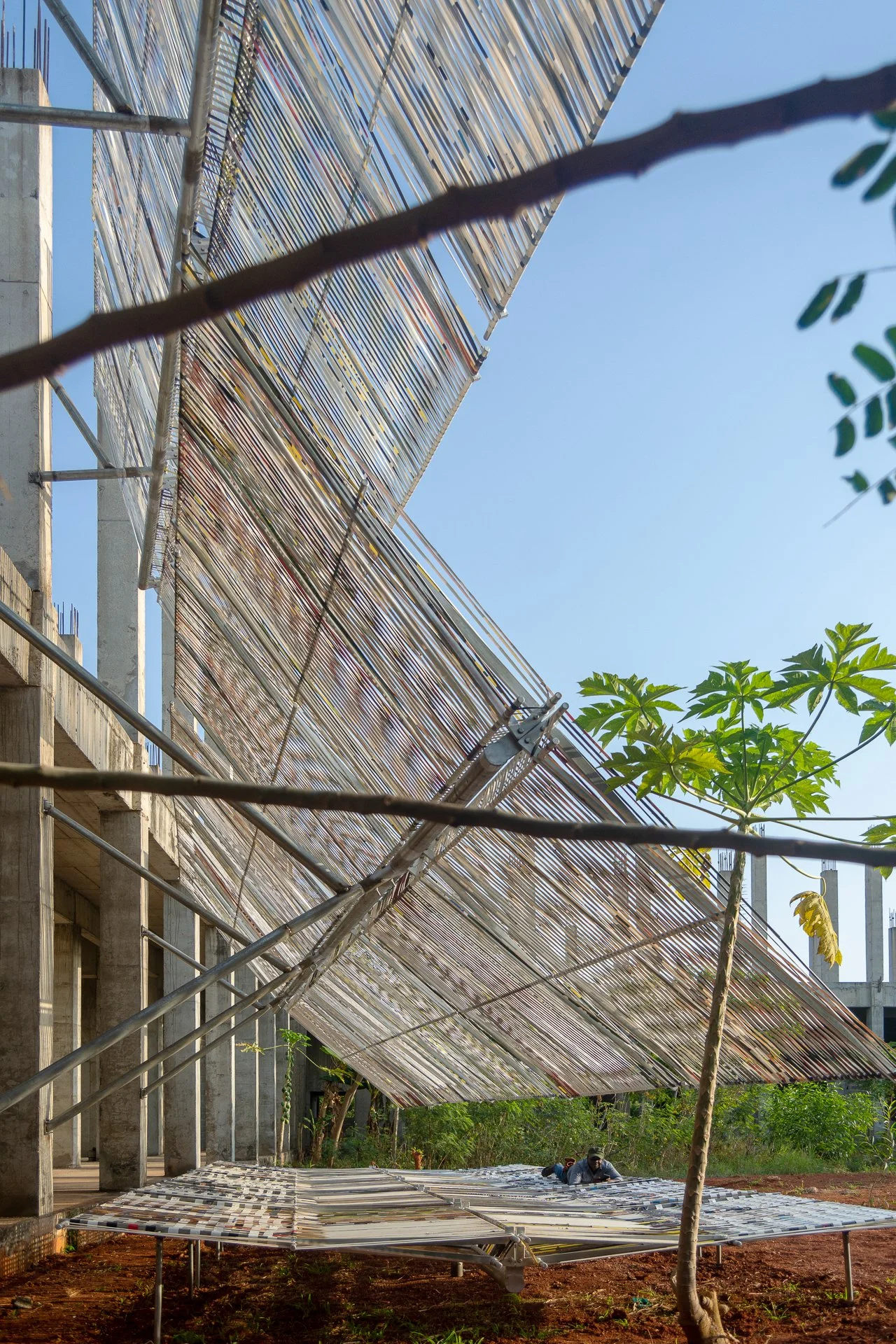
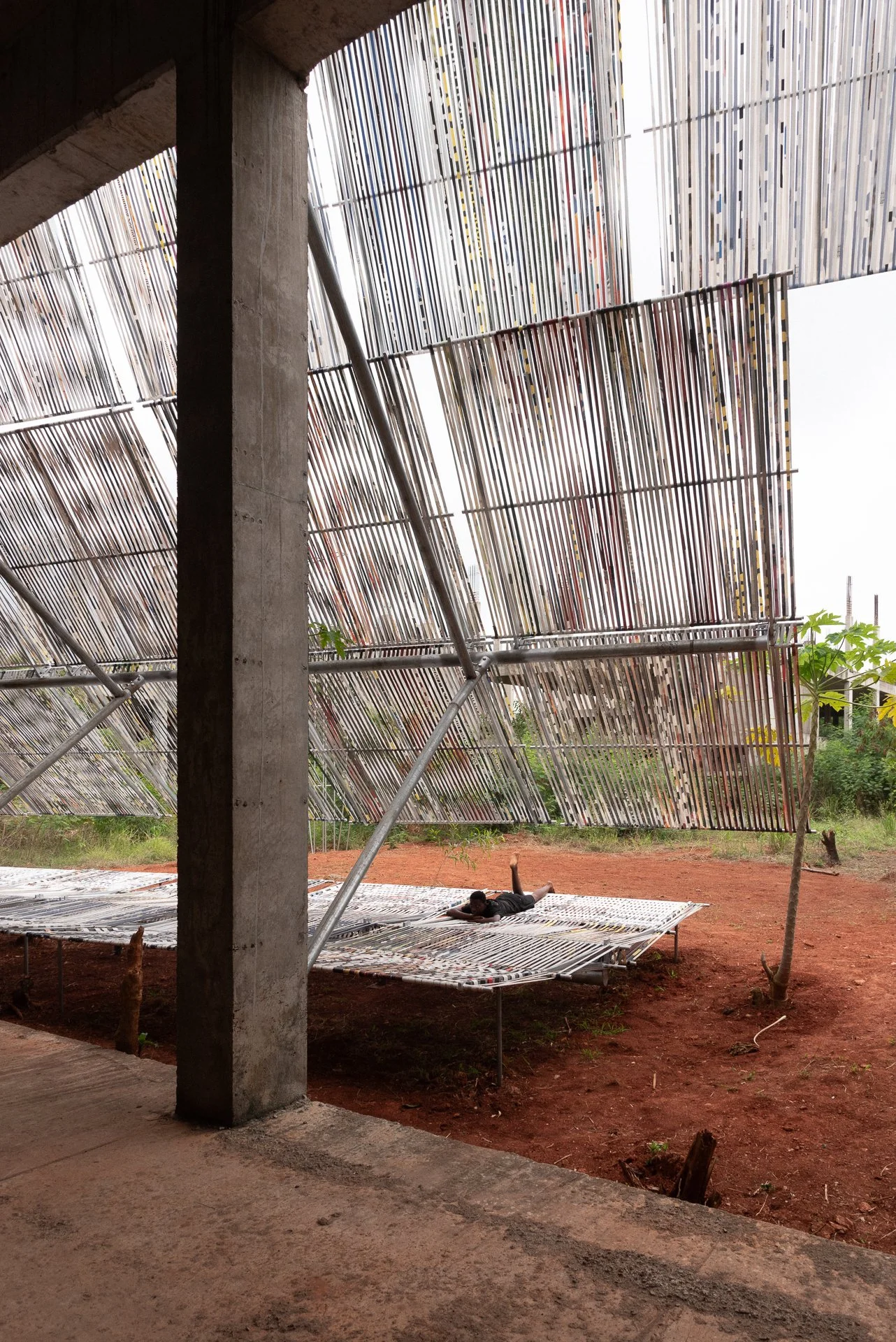
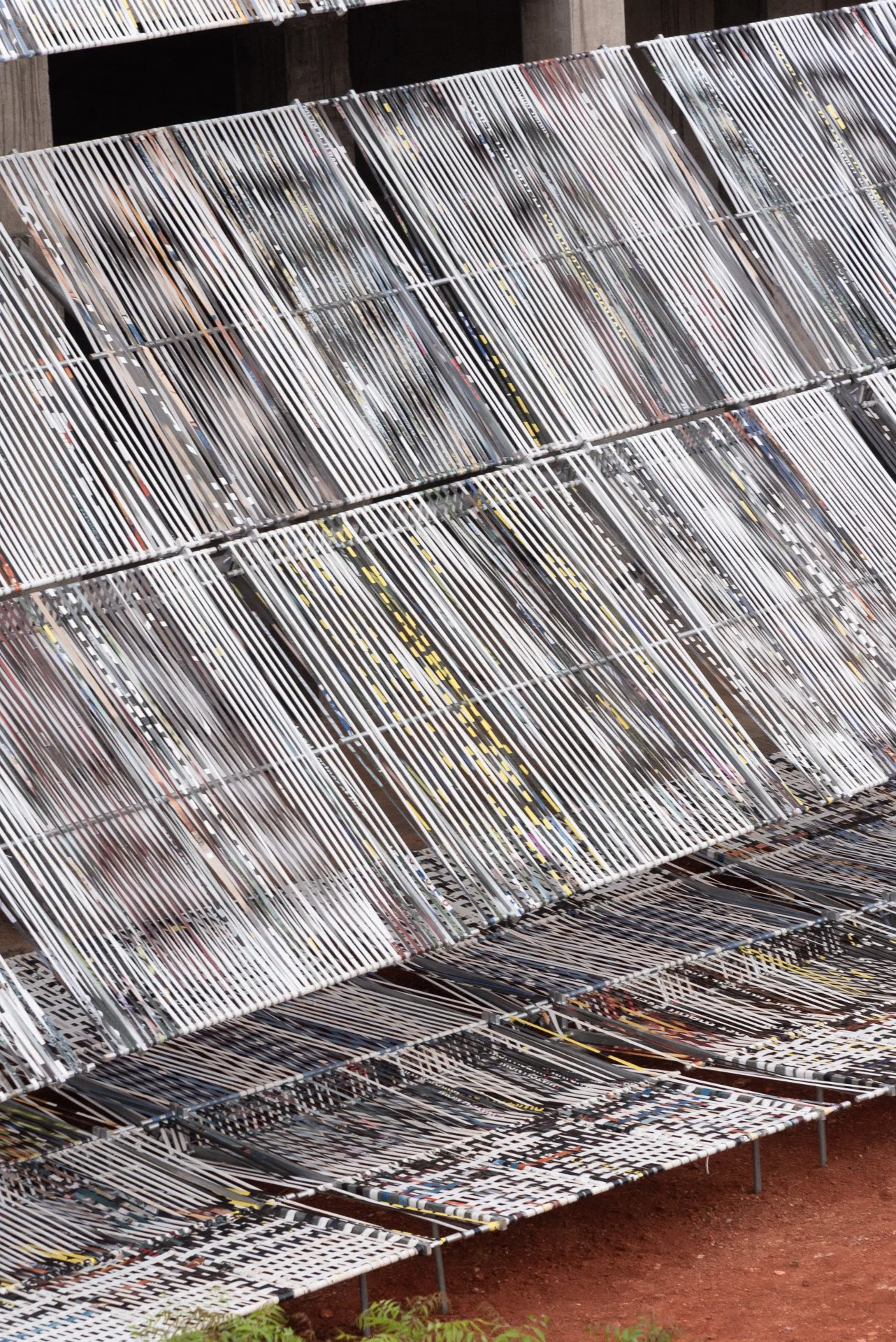
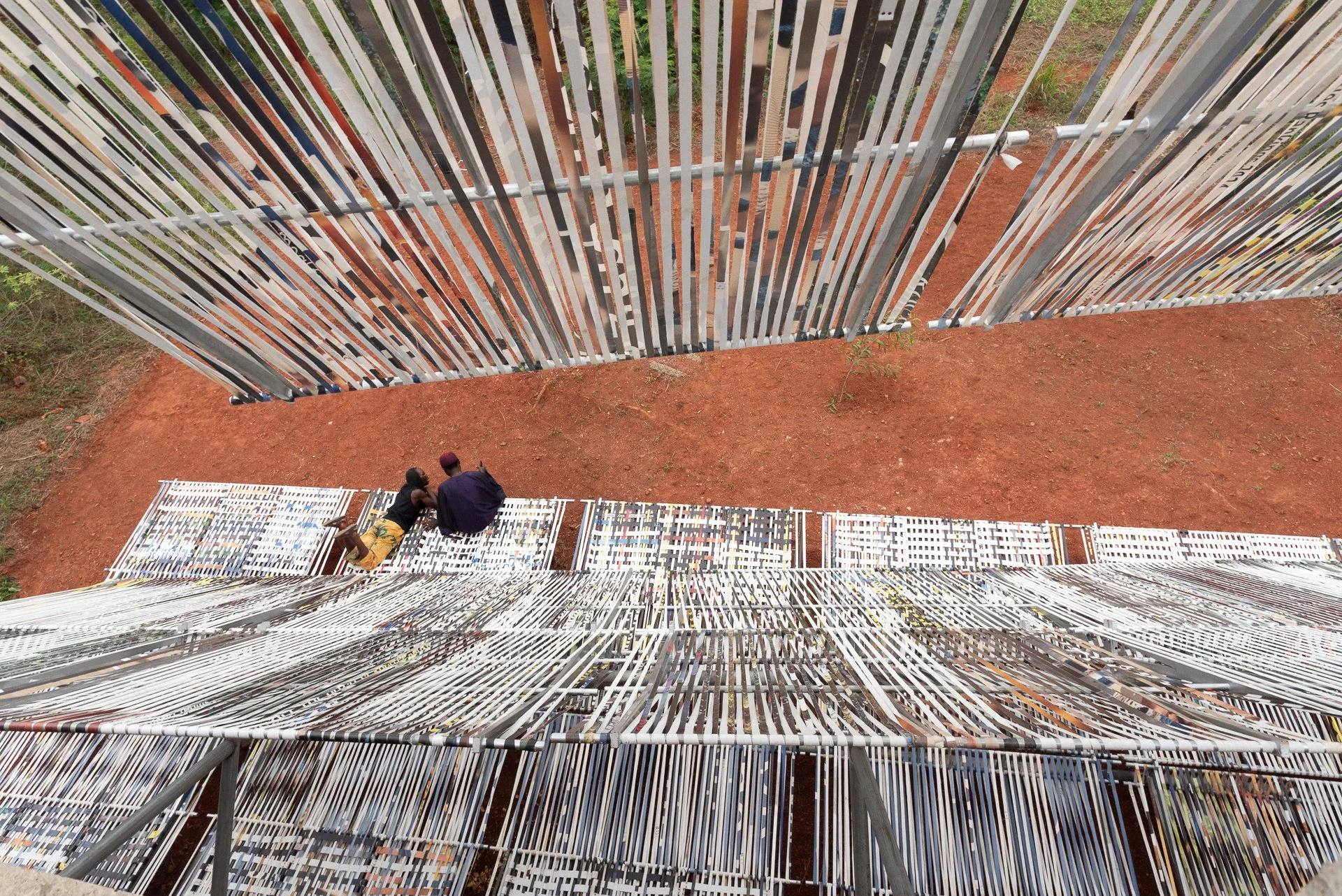
The installation provides shade, filters views, and creates places to sit and lie down through an oversized daybed structure. Inspired by the woven beds commonly found on construction sites and within unfinished buildings in West Africa, and used by caretakers, workers, or inhabitants, this everyday object is translated into architectural form, transforming everyday practice into shared civic space.
Limbo Engawa also draws attention to the surrounding land and its active use, particularly urban farming, creating a setting for interaction between farmers, caretakers, and museum visitors. In doing so, it foregrounds forms of labor and stewardship that often remain invisible within institutional cultural spaces.
The installation is designed as a modular system of lightweight components that can be carried by a single person and assembled on site. It uses steel profiles and construction techniques familiar from roadside kiosks and billboard structures, combined with salvaged billboard material cut into strips and woven onto the frames. Individual frames are aggregated to form larger canopy and seating elements, allowing the system to adapt to different sites and configurations.
Rather than presenting a finished object, Limbo Engawa operates as an infrastructural gesture — temporary, mobile, and open-ended. It proposes architecture not as a monument, but as a tool for inhabitation, care, and exchange within spaces that exist, quite literally, in limbo.
Architects: TAELON7
Client: Limbo Museum (Accra, Ghana) in partnership with Art Omi (Ghent, NY, USA) / Location: Accra, Ghana / Program: Pavilion / Year: 2026 / Curator: Dominique Petit-Frère (Limbo Musem) / Structural consultant: Moritz Heimrath (Bollinger + Grohmann) / Metalworks: Joseph Awumee / Weaving: Briena Montana (lead), Eugenia Dormenyo, Nana Ama Ayine Safo, Wonder Fiatsi / Photography: Edem Tamakloe, Juergen Benson-Strohmayer
Supported by Art Omi, Limbo Museum, Austrian Cultural Forum Accra